National Service Hotline:0756-8666883

-
Company ProfileZhuhai Hongta Renheng Packaging Co., Ltd. was established in 1991 and serves as the core platform for the high-end packaging paper segment under China Paper Investment Co., Ltd., a major state-owned enterprise in China’s paper industry. It is also the first company in China to produce high-grade coated white cardboard and successfully replace imported equivalents.

-
-
-
-
-
-
-

— News Updates —
NEWS INFORMATION
- All
- Product Management
- News and Information
- Introduction Content
- Enterprise outlets
- Frequently Asked Questions
- Corporate Video
- Corporate Brochure
Information Disclosure List of Key Pollutant-Discharging Units in Zhuhai City
2023/08/31
Information Disclosure List of Key Pollutant-Discharging Units in Zhuhai City
(According to Order No. 31 of the Ministry of Environmental Protection No. Measures for the Disclosure of Environmental Information by Enterprises and Public Institutions
| (1) Basic Information |
Unit Name |
Zhuhai Hongta Renheng Packaging Co., Ltd. |
Organization Code |
91440400617502107U |
|||||||||||||||||||||||
| Legal Representative |
Huang Xin |
Contact Information |
0756-8666927 |
||||||||||||||||||||||||
| Production Address |
No. 508, Jinji West Road, Qianshan, Xiangzhou District, Zhuhai City Number |
||||||||||||||||||||||||||
| Main contents, products, and scale of production, operation, and management services |
Manufacture of mechanical paper and cardboard |
||||||||||||||||||||||||||
| (2) Wastewater Discharge Information |
Names of Major Pollutants and Characteristic Pollutants |
Wastewater: COD , Ammonia Nitrogen Exhaust gases: nitrogen oxides, soot, sulfur dioxide |
Emission method |
Wastewater, after treatment in the biochemical system, is discharged into the municipal sewage network and then conveyed to the Gongbei Wastewater Treatment Plant; exhaust gases are treated by cyclone+ After treatment by baghouse dust collection and other environmental protection facilities, the emissions are discharged through a 25-meter-high chimney. |
|||||||||||||||||||||||
| Number and distribution of discharge outlets |
One wastewater discharge outlet, designated WS-090-1. , One exhaust gas outlet, designated FQ-090-1. |
Emission concentration |
2018 Annual emission concentration: COD It is 37.85 mg/L, ammonia nitrogen 0.456 mg/L, and sulfur dioxide 0.79 mg/m³. 3 , nitrogen oxides 59.76 mg/m 3 , smoke and dust 17.26 mg/m 3。 |
||||||||||||||||||||||||
| Total emissions |
2018 The annual total emissions are: COD The totals are 122.16 tonnes, with ammonia nitrogen at 1.42 tonnes; sulfur dioxide at 0.596 tonnes, nitrogen oxides at 44.727 tonnes, and smoke and dust at 12.834 tonnes. |
Exceedance situation |
None |
||||||||||||||||||||||||
| Pollutant Emission Standards in Effect |
|
Approved total emissions |
Approved annual total emissions: COD 294.4 tons, with 29.44 tons of ammonia nitrogen; 34.04 tons of sulfur dioxide and 136.15 tons of nitrogen oxides; and 20.42 tons of soot. |
||||||||||||||||||||||||
| (3) Information on Pollution Prevention and Control Facilities |
Construction Status |
The primary environmental pollution factors generated during the company’s production process are wastewater, exhaust gases, and solid waste. As our company does not operate a pulp-making production line, pollutant emissions are controlled at the source. Production wastewater primarily originates from the white water generated during pulping and papermaking in the paper-making workshop, as well as a small amount of rinse water from the coating preparation section. The white water mainly contains fine fibers as impurities, while the coating rinse water contains a small amount of coating material. The primary pollutants are suspended solids, COD, and BOD. 5 Wait. The company utilizes imported equipment, including ultrafiltration and multi-disc recovery units, to recover and recycle coatings and fibers from wastewater. Additionally, more than 70% of the treated paper-machine white water is reused, and the effluent after these treatments is then fed into the wastewater treatment system. Following biochemical treatment, the company’s wastewater is discharged into the municipal sewage network for final treatment at the Zhuhai Gongbei Water Purification Plant. Flue Gas Purification System for Biomass Boiler-Produced Pellet Fuel Boilers The flue gas from biomass briquette-fired boilers mainly contains particulate matter and SO. 2 , NOx and other pollutants. Its SO 2 The emission levels are extremely low, and flue dust is collected using a cyclone-plus baghouse dust-collection system, achieving a dust removal efficiency of 99.5%. Currently, the biomass pellet-fired boiler has completed the completion acceptance of its environmental protection facilities. Solid and hazardous wastes shall be transferred in accordance with the Five-Part Transfer Form system to companies holding valid treatment qualifications. |
Operating Status |
Normal operation |
|||||||||||||||||||||||
| (4) Environmental Impact Assessment of Construction Projects and Other Administrative Permits for Environmental Protection |
Environmental Impact Assessment of the Construction Project |
In September 1998, the company obtained approval from the State Environmental Protection Administration and the Guangdong Provincial Environmental Protection Bureau for the environmental impact assessment of the 150,000-ton high-grade packaging cardboard project (Document No. Huanfa [1998] No. 321 and Yuehuanhan [1998] No. 208, respectively). In 2010, it secured approval from the Zhuhai Municipal Environmental Protection Bureau for the environmental impact assessment of the technical renovation project for the heat-supply boiler (MBF) (Document No. Zhuhuanjian [2010] No. 5) and for the trial operation of the renovation project (Document No. Zhuhuanshi [2010] No. 6). In 2012, it received approval from the Xiangzhou District Environmental Protection Bureau for the environmental impact report form related to the technological renovation project for clean production of the paper machine and comprehensive wastewater treatment (Document No. Zhuxianghuanjianbiao [2012] No. 155). In November 2017, the Xiangzhou District Environmental Protection Bureau of Zhuhai City approved the Environmental Impact Report Form for the Sludge Resource Utilization Technological Upgrade Project of Zhuhai Hongta Renheng Packaging Co., Ltd. (Document No. Zhu Xiang Huan Jian Biao [2017] No. 63).
|
Other Administrative Licensing Matters Related to Environmental Protection |
In 2003 In December of [year], the project for the 150,000-ton high-grade packaging cardboard facility passed the environmental protection completion acceptance inspection (Guangdong Environmental Protection Letter [2003] No. 969); in 2013, the technical renovation project for the heat-supply boiler (MBF) successfully completed its acceptance inspection (Zhuhai Environmental Protection Acceptance [2013] No. 5); and in 2014, the biochemical wastewater treatment project also passed its acceptance inspection (Zhuhai Xiangzhou Environmental Protection Acceptance [2014] No. 10).
|
|||||||||||||||||||||||
| (5) Emergency Response Plan for Sudden Environmental Incidents |
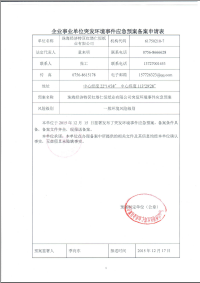
Our company’s “Record Filing Form for the Emergency Response Plan for Sudden Environmental Incidents,” “Emergency Response Plan for Sudden Environmental Incidents,” “Environmental Incident Risk Assessment Report,” and “Environmental Emergency Resource Survey Report” were filed with the Environmental Inspection Branch of the Zhuhai Municipal Environmental Protection Bureau on December 28, 2015. Work on a new round of the emergency response plan for sudden environmental incidents is currently underway. |
||||||||||||||||||||||||||
| (6) Self-Monitoring Plan for the Environment (to be completed by nationally monitored key pollutant-discharging units) |
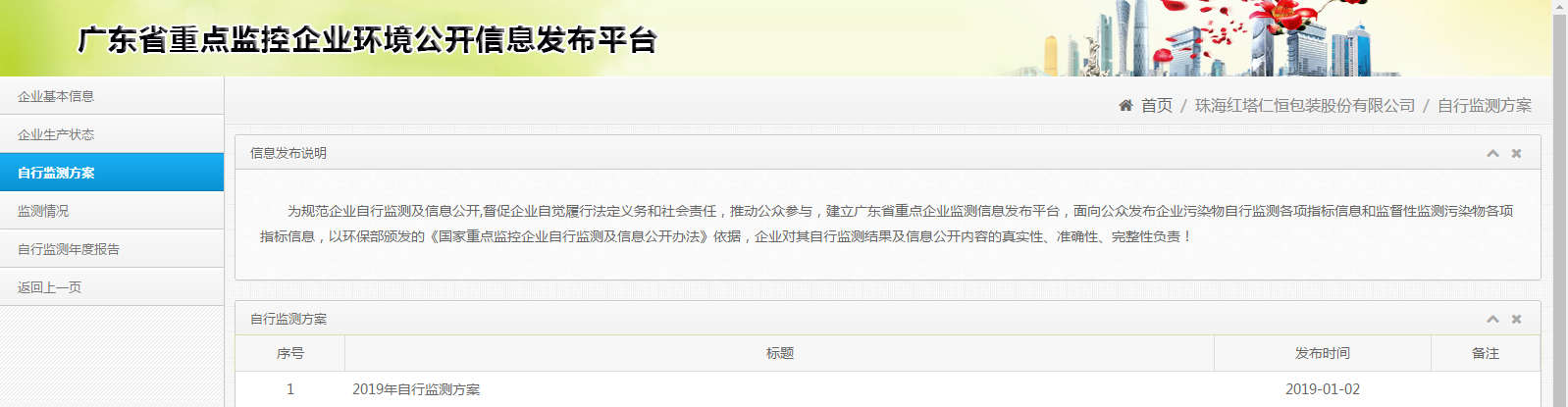
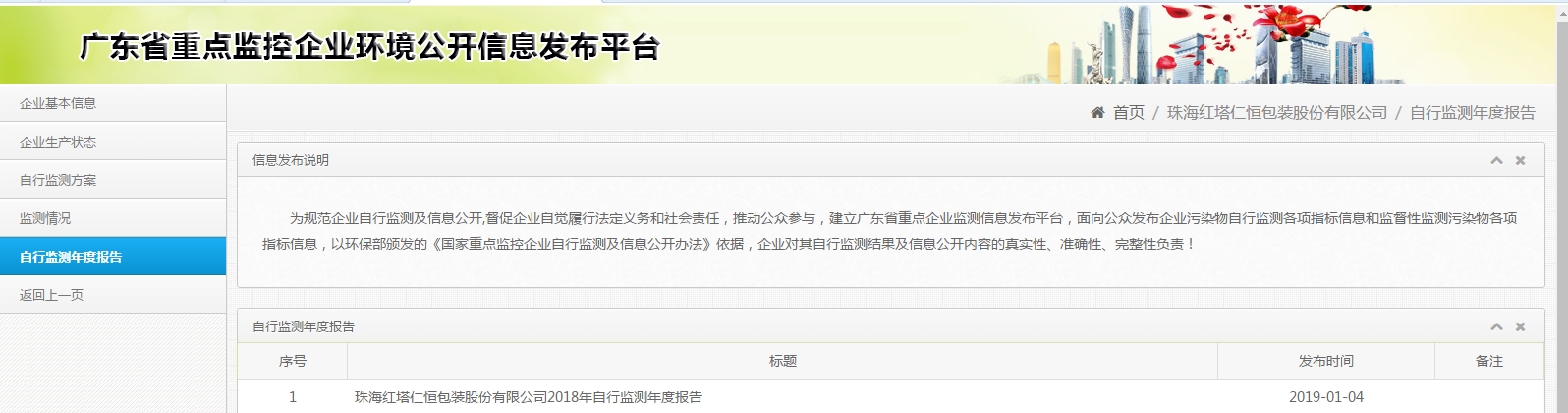
In accordance with the Ministry of Environmental Protection’s Measures for Self-Monitoring and Information Disclosure by Key National Monitoring Enterprises (Trial) (Document No. 81 of 2013 issued by the Ministry of Environmental Protection) and the Work Plan for Self-Monitoring and Information Disclosure by Key National Monitoring Enterprises in Guangdong Province, our company has prepared a self-monitoring plan, an annual self-monitoring report, and information on self-monitoring results, and has made such information publicly available on the Guangdong Provincial Platform for Information Disclosure of Self-Monitoring by State-Controlled Enterprises. The scope of the enterprise’s self-monitoring shall include: monitoring of atmospheric pollutant emissions from major exhaust gas discharge outlets; monitoring of water pollutant emissions from major wastewater discharge outlets; and noise monitoring at the plant boundary. ① The daily and hourly average values of chemical oxygen demand and ammonia nitrogen shall be made publicly available, and other pollutants in wastewater shall be monitored at least once per month. ② Waste gas pollutants shall be monitored at least once per quarter. ③ Noise at the factory boundary shall be monitored at least once per quarter. See Table 1 for details. Plant-Wide Pollutant Source Location Layout Table. Where an enterprise conducts self-monitoring through commissioned monitoring, it shall entrust such monitoring to a social testing institution accredited by the provincial environmental protection authority or to an environmental monitoring institution affiliated with the environmental protection authority. Environmental monitoring institutions affiliated with the environmental protection authority that undertake supervisory monitoring tasks shall not concurrently undertake the commissioning of self-monitoring by the enterprises they supervise. The company offers COD. One set of online ammonia-nitrogen wastewater monitoring system and one set of flue-gas online monitoring system are installed. Data from the online monitoring systems for chemical oxygen demand and ammonia nitrogen are published daily on the Guangdong Provincial Comprehensive Management Platform for Key Pollution Sources; for other pollutants, monitoring data obtained through commissioned third-party qualified agencies in accordance with regulatory requirements are subsequently published on the platform. |
||||||||||||||||||||||||||
| (7) Other environmental information that shall be made public |
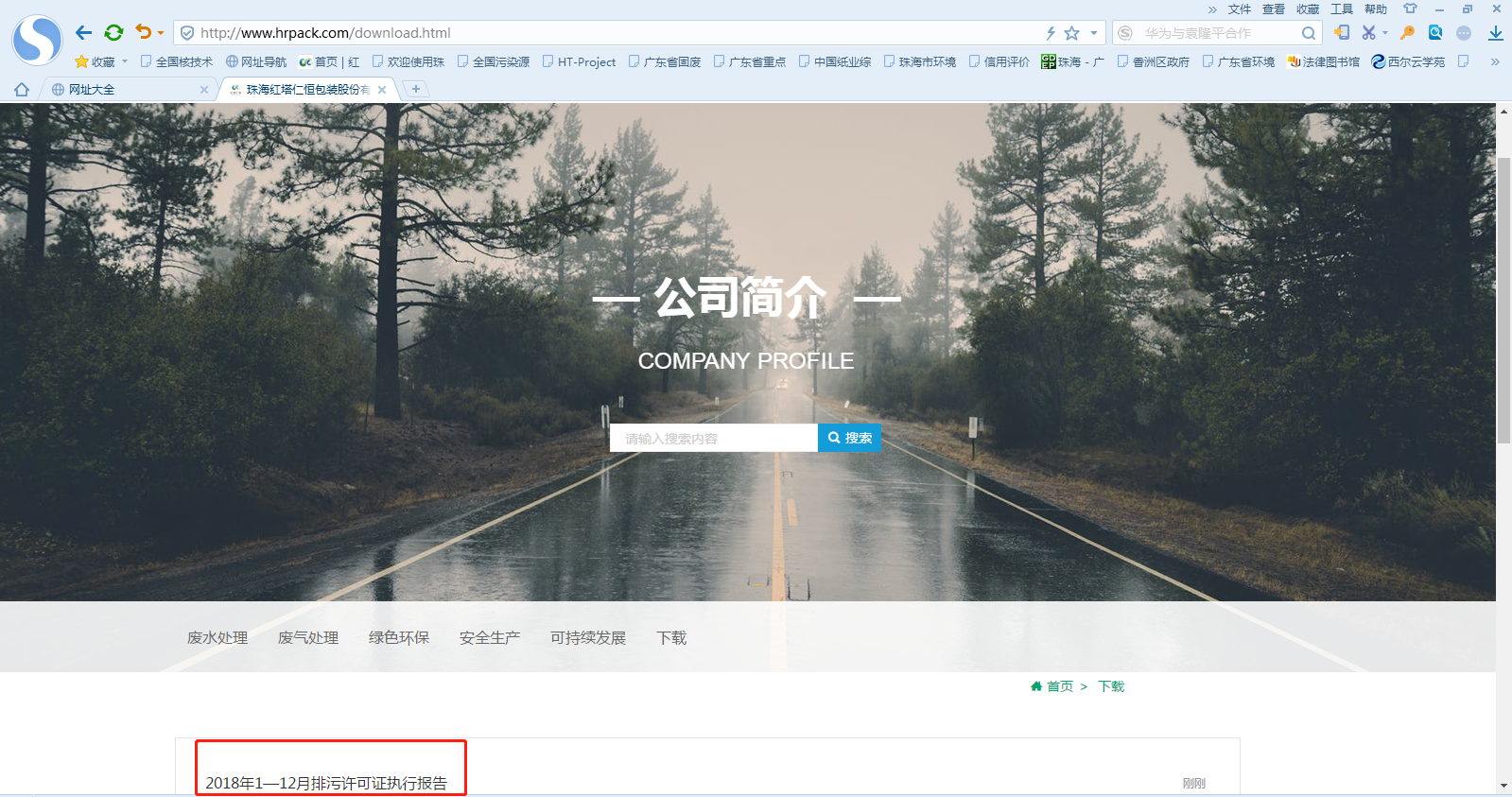
Publish information and documentation on the company’s website, including wastewater and exhaust emission data, record-keeping ledgers, and emergency response plans for environmental incidents. http://www.hrpack.com/download.html |
||||||||||||||||||||||||||

Note: Where new environmental information is generated or existing environmental information undergoes a change, key pollutant-discharging entities shall make such information publicly available within thirty days from the date of its generation or amendment. Where otherwise provided by laws or regulations, the provisions thereof shall prevail.
Related News
23
2026/04
28
2023/08
03
2023/08
Contact Us
Zhuhai Hongta Renheng Packaging Co., Ltd.
Address: No. 508, Jinji Road, Qianshan, Zhuhai City, Guangdong Province, China
Phone:86-0756-8666883
E-mail:huhb@htrh-paper.com
Fax: 86-756-863111
Scan the code to follow and consult.
SEOTechnical Support:China Enterprise Dynamics Zhuhai
SAF Coolest v1.3 设置面板 WJNSX-ZRWN-QWAWE-ZEF
无数据提示
Sorry, there is currently no content in this section.!
You can view other sections or return.Home